Kayce Petty
- righttothrive2025
- Dec 30, 2025
- 2 min read

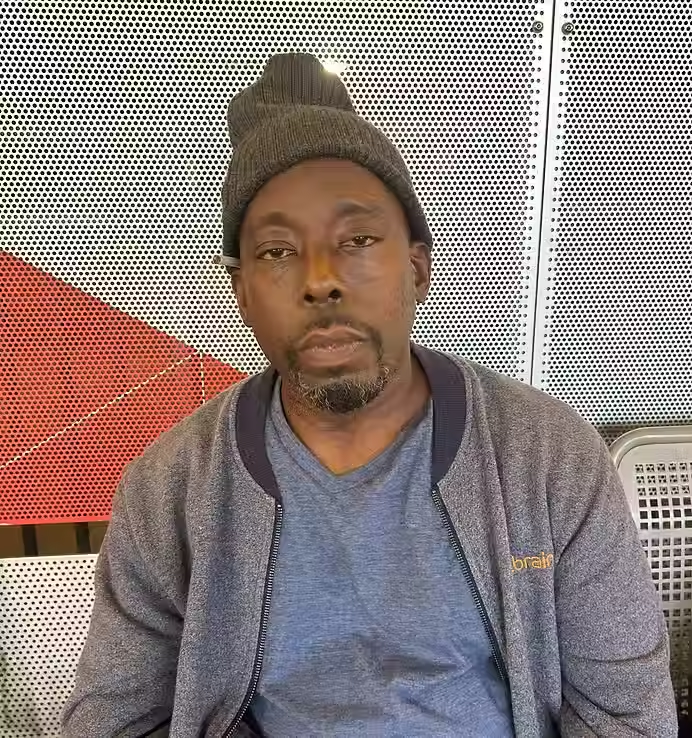
Kayce Petty never expected to become homeless. For most of his life, he worked hard, earned his own money, and took pride in keeping his home clean and welcoming. But a mix of family conflict, untreated mental health struggles, and a few sudden setbacks pushed him into a place he never thought he would be.
When his family dropped him off at Healing Transition, he thought they were taking him fishing. Instead, he found himself in a long-term treatment and recovery program he did not choose. Despite the shock and hurt, Kayce decided to stay because the alternative was sleeping outside, vulnerable to the dangers many people never have to imagine. “I am not hungry, I am not outside, and nobody is spitting on me,” he said. “For now, that is something.”
Kayce has been in the program for two and a half months. He describes it not as homelessness but as a “healing transition,” although the rules are strict and often feel unfair. He cannot work yet, even though he wants to. He cannot question the system without being punished. A simple jalapeño pepper he picked from the garden led to a disciplinary action that required him to wake at five in the morning and carry all of his belongings across town. “I question things,” he said. “And when I cannot question them, I shut down.”
Despite the challenges, Kayce is fighting for a future. He has struggled with addiction, but he knows what stability feels like, and he knows he wants it back. He speaks openly about being labeled an addict or “a dressed-up trash can,” and how damaging those words can be when someone is trying to rebuild their life. “You cannot judge a book by its cover,” he said. “But people do. And sometimes they should, until they know the real story.”
Kayce’s real story is not one of failure, but of resilience. He has already applied for jobs and was recently offered one that pays twenty-one dollars an hour. His dream is simple but powerful: to work, to earn honestly, and to regain control of his life without relying on disability checks or family members who have turned their backs on him.
What he misses most is a support system—people who check in, people who ask how he is feeling, people who truly listen. “You didn’t say you were happy to be awake today,” he said softly. “Nobody notices things like that where I am.”
For now, Healing Transition gives him a bed, safety, and time to figure out who he wants to become. But the future he imagines is bigger. In five or ten years, he hopes to complete the program, finish writing the story of his life, and return to the world with purpose and stability—on his own terms. He wants to eventually start a food truck that accepts food stamps because "people deserve to eat good, you know, no matter who you are."
Kayce Petty’s journey is a reminder that homelessness rarely happens for a single reason. It is also a reminder that the people we pass every day carry stories of heartbreak, strength, and hope that we may never hear unless we take a moment to ask.
Comments